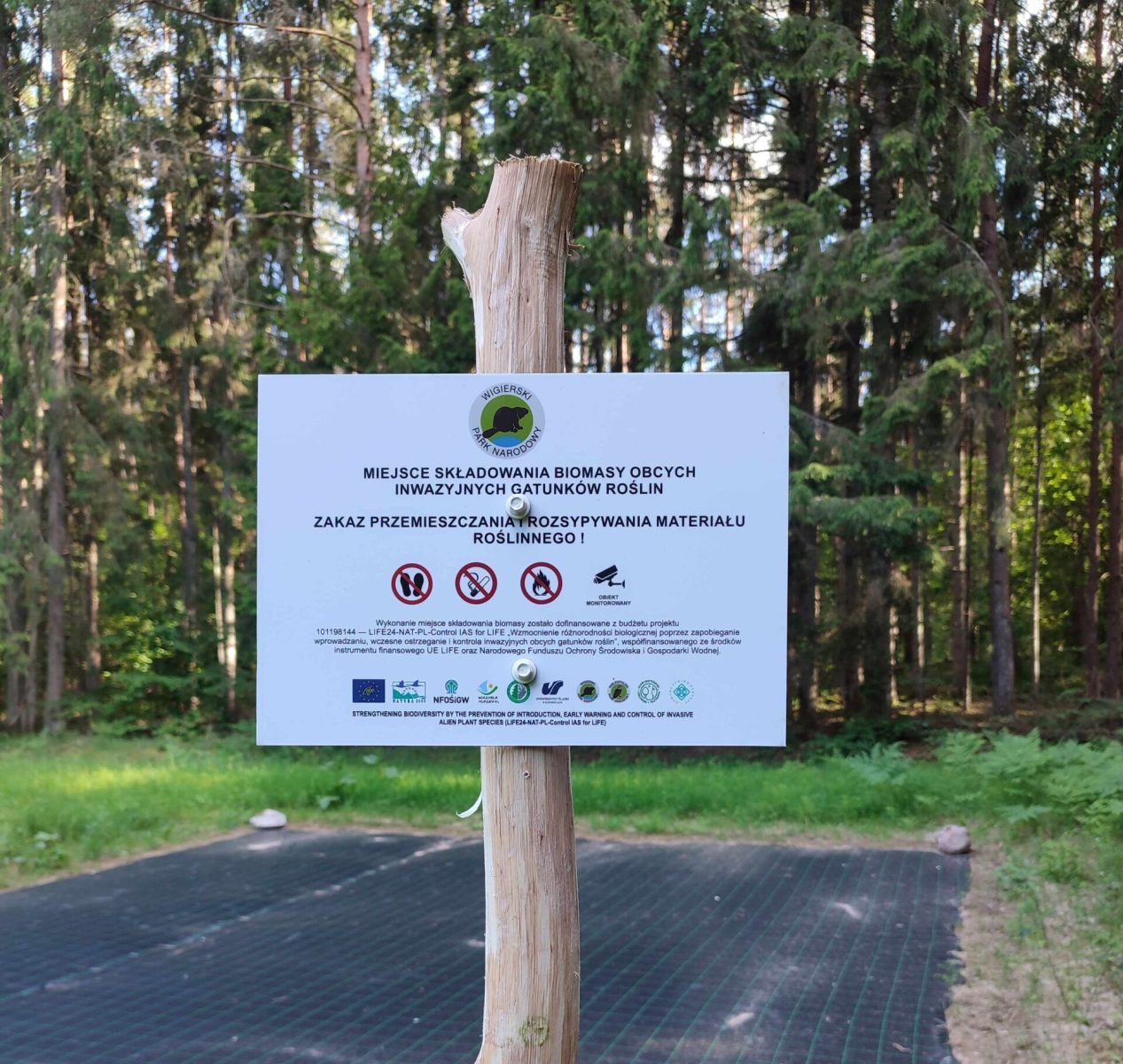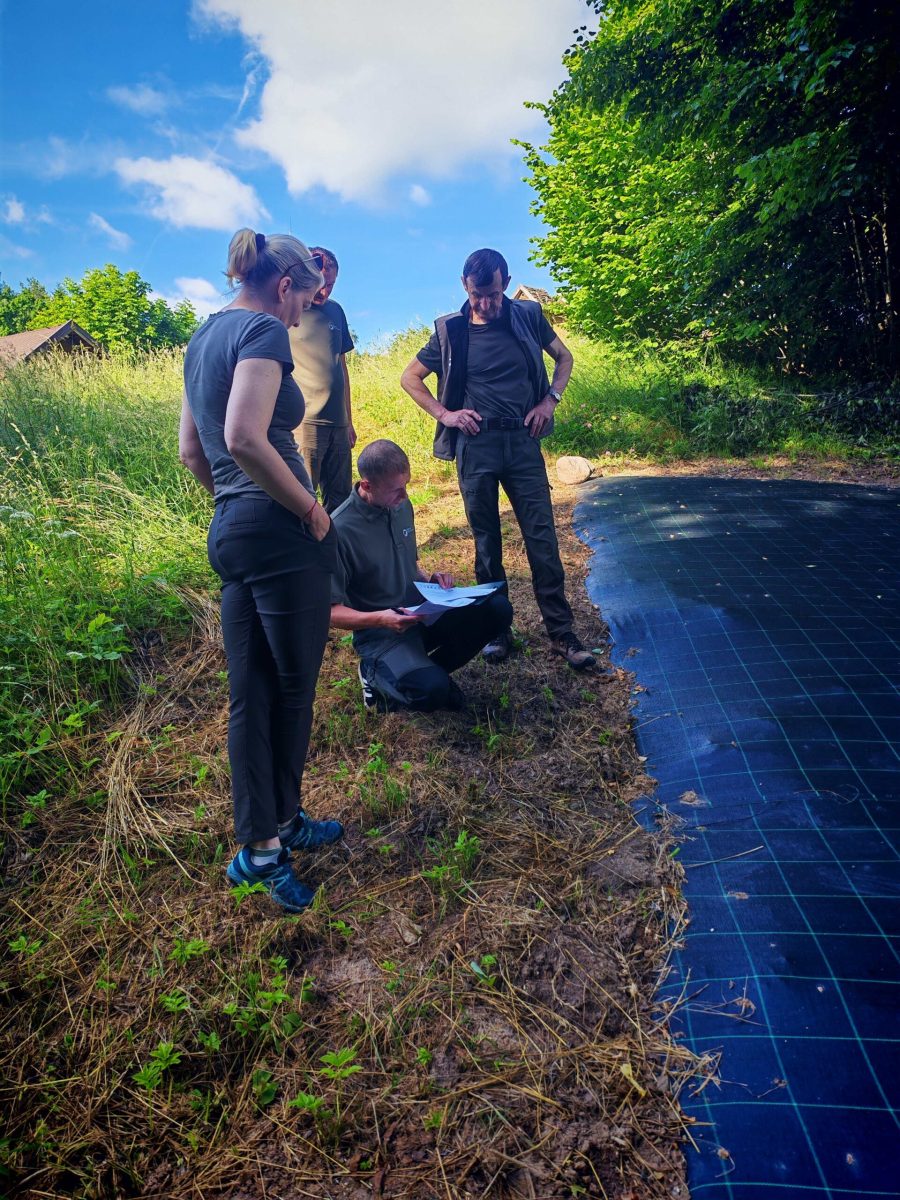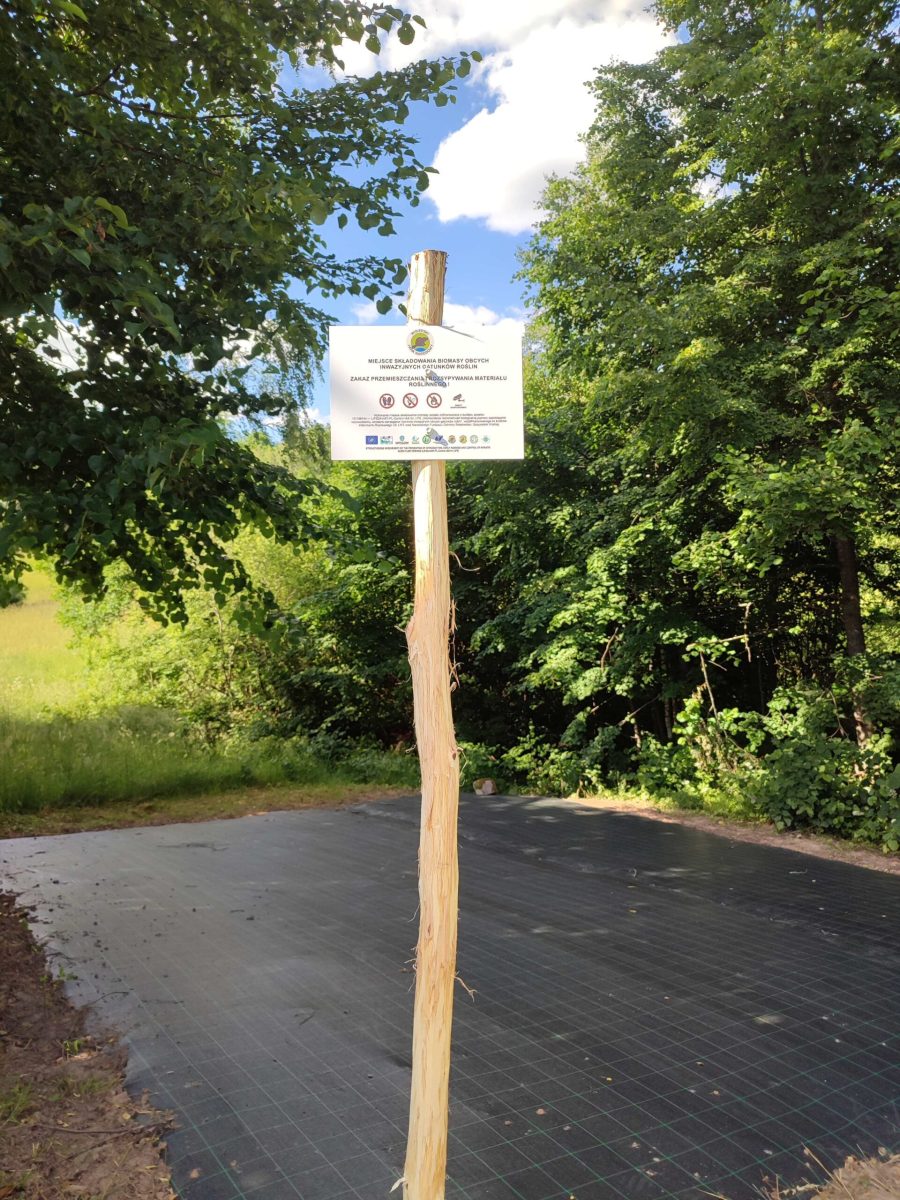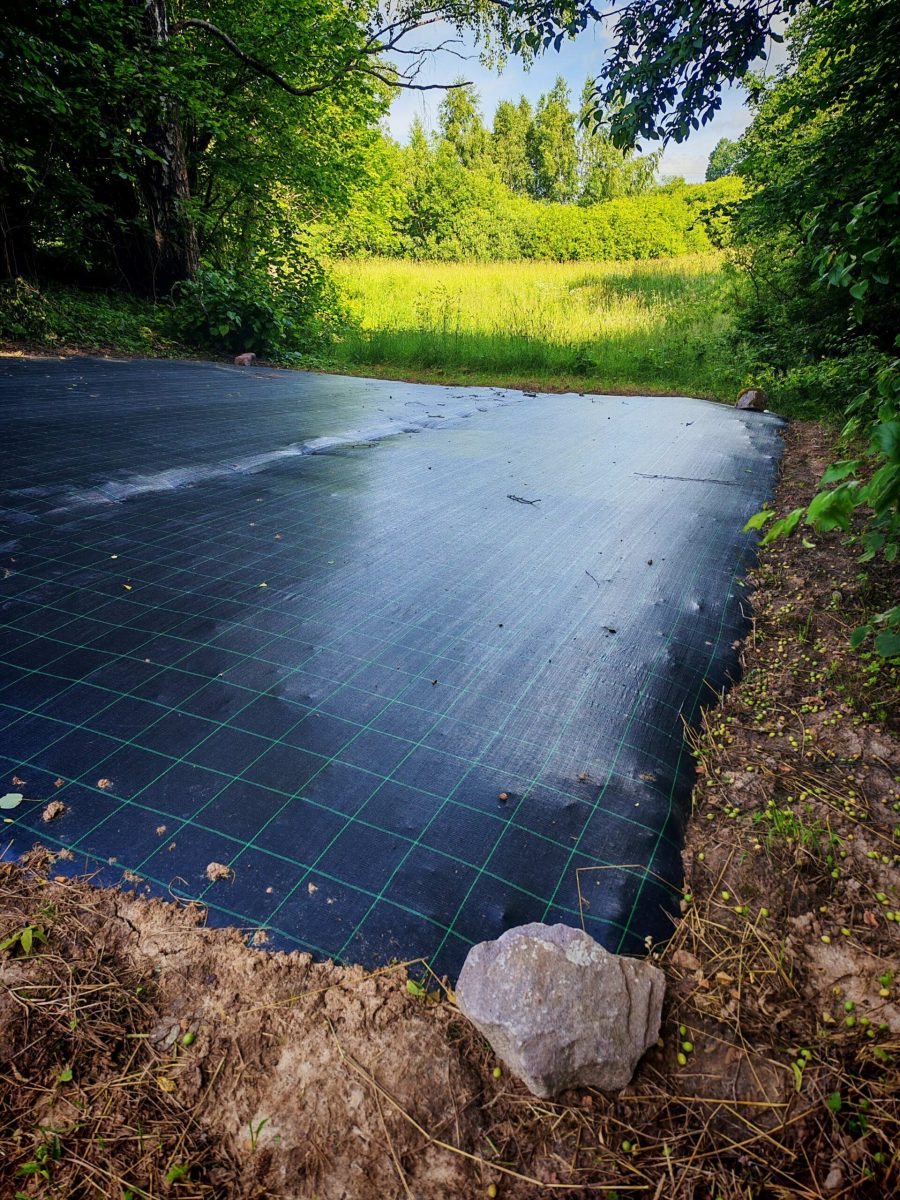


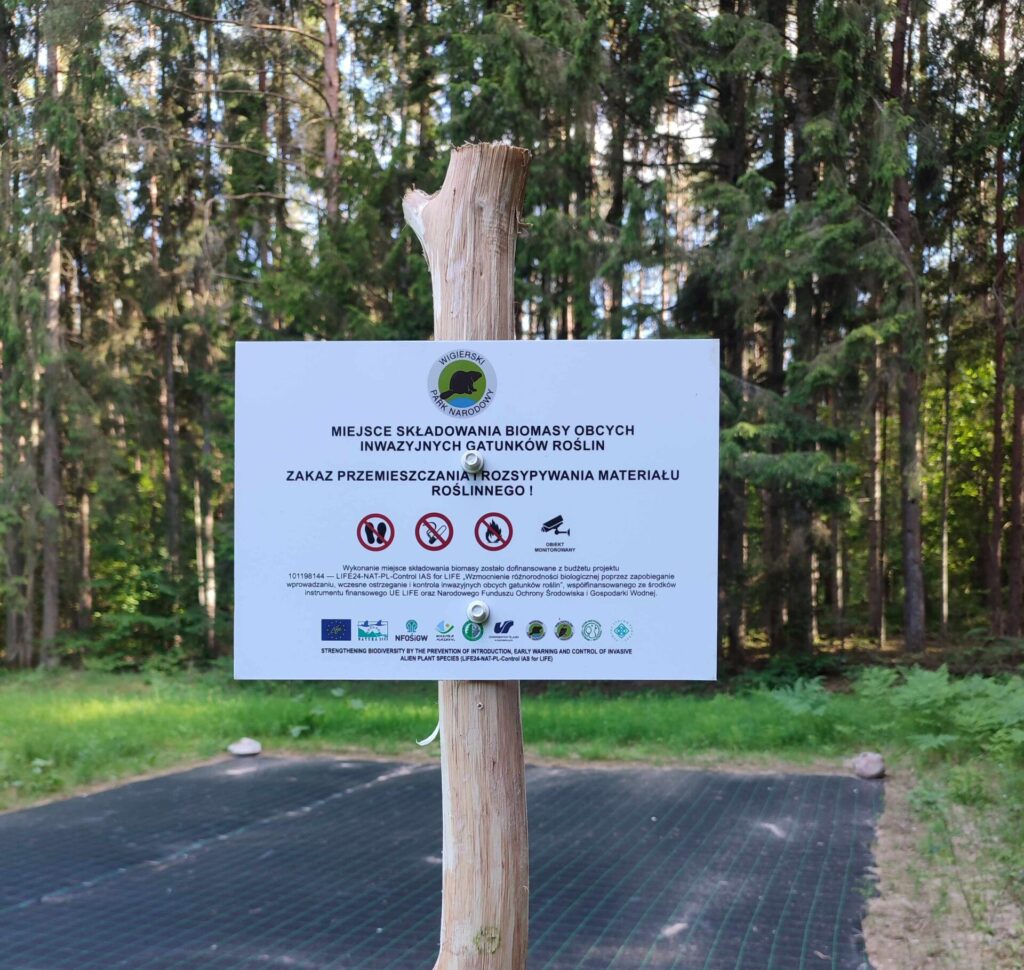
On June 23, Wigry National Park completed the implementation of task T.6.3: Preparation of sites for the safe storage of IAS (Invasive Alien Species) biomass.
The scope of this task included, among others:
– clearing shrubs and herbaceous vegetation.
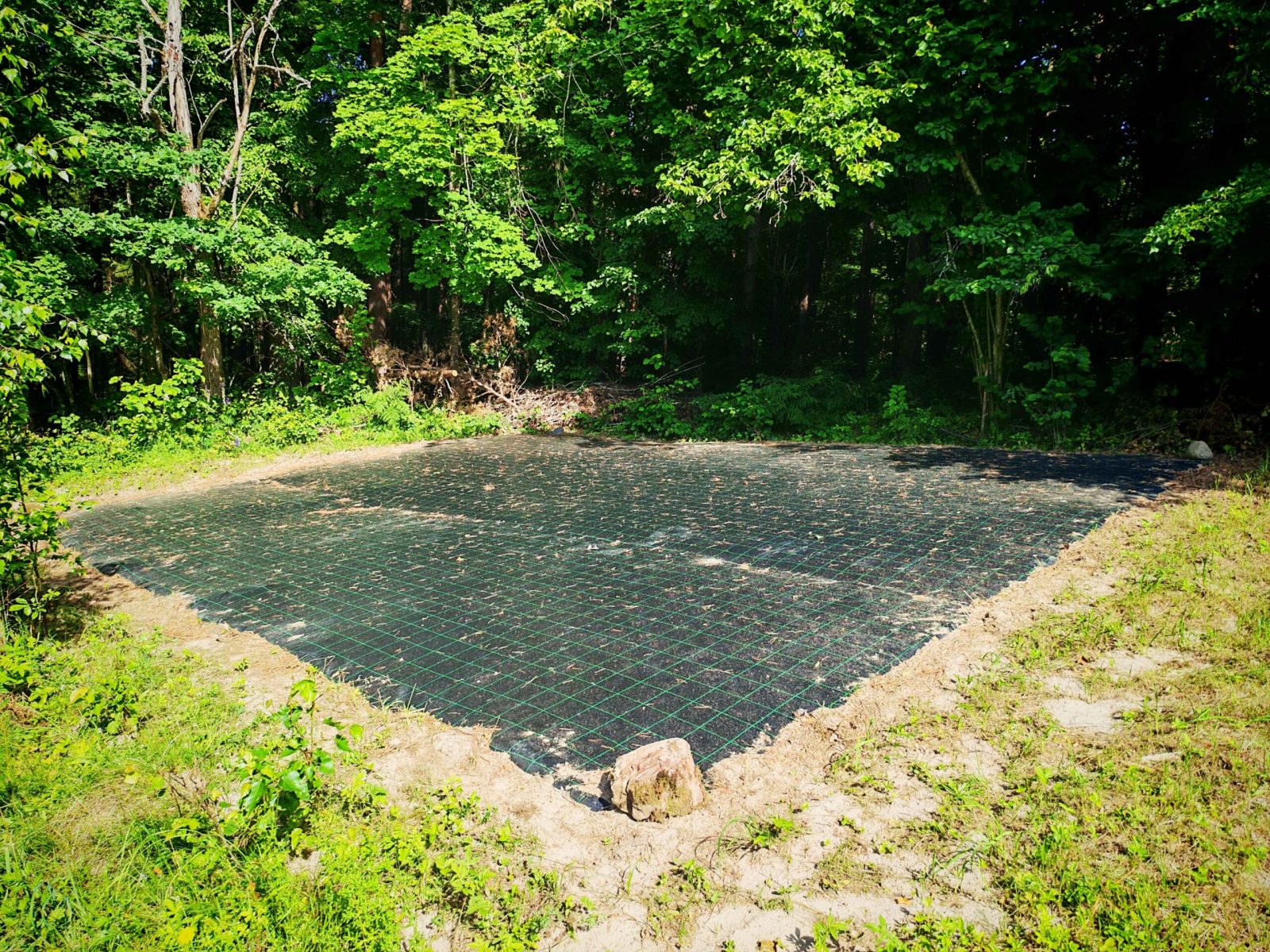
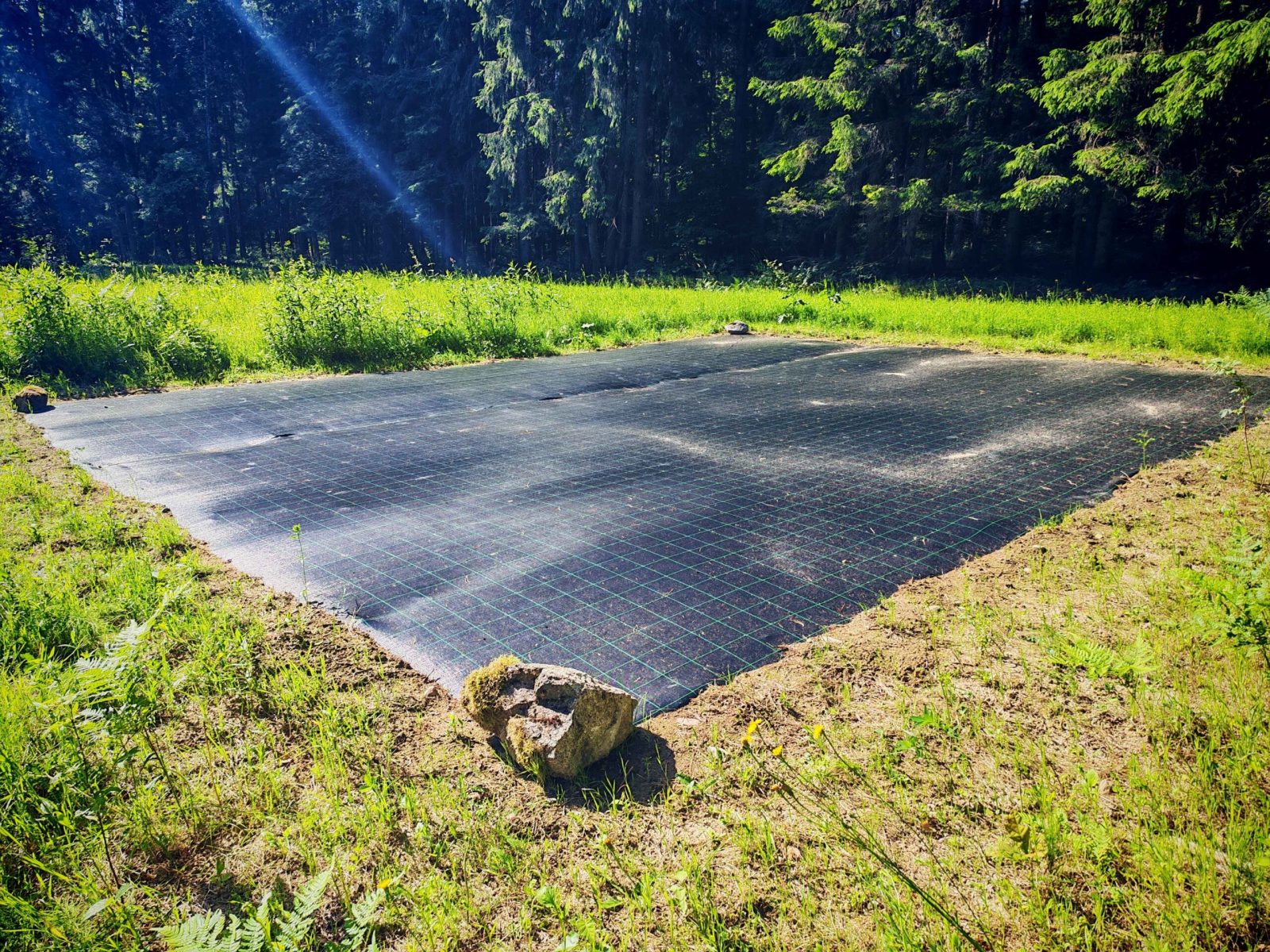
– proper grading of the terrain to ensure a slope in one or more directions (depending on the natural topography of the area), allowing rainwater to drain freely off the storage site surface.
– securing the ground with a liner/sheeting secured to the substrate with metal pins and additionally anchored at the edges with stone blocks in selected areas.
Each site covers an area of 80 m² and they are located in the following areas: Lipniak Conservation District, Gawarzec Conservation District, and Lipowe Conservation District.
These locations complement the previously established network of IAS biomass storage sites within Wigry National Park, bringing the current total to 7 sites.
The IAS eradication procedure does not end with cutting or uprooting the plants. The harvested biomass poses a major secondary threat, as many invasive alien species possess exceptional regenerative capabilities. Knotweeds can regrow from a mere few-centimeter fragment of a rhizome or stem, while the seeds of balsam or goldenrod remain viable for years.
An impermeable liner prevents live plant fragments from coming into contact with the soil, thereby blocking any potential for re-rooting. Proper grading of the terrain prevents water pooling under and around the biomass pile. Standing water could cause rotting or create conditions that favor the survival of certain plant structures. Controlled water runoff accelerates the natural process of drying out and tissue death.
Furthermore, establishing multiple storage points minimizes transport-related risks. Hauling fresh IAS biomass over long distances could lead to the accidental dispersal of seeds or shoot fragments along transport routes. Therefore, the biomass must die off on-site, under strictly controlled conditions.